GiveCard
A proposal for a cashless giving card that lets people donate to someone asking for help, redeemable only for food, water and other essentials.
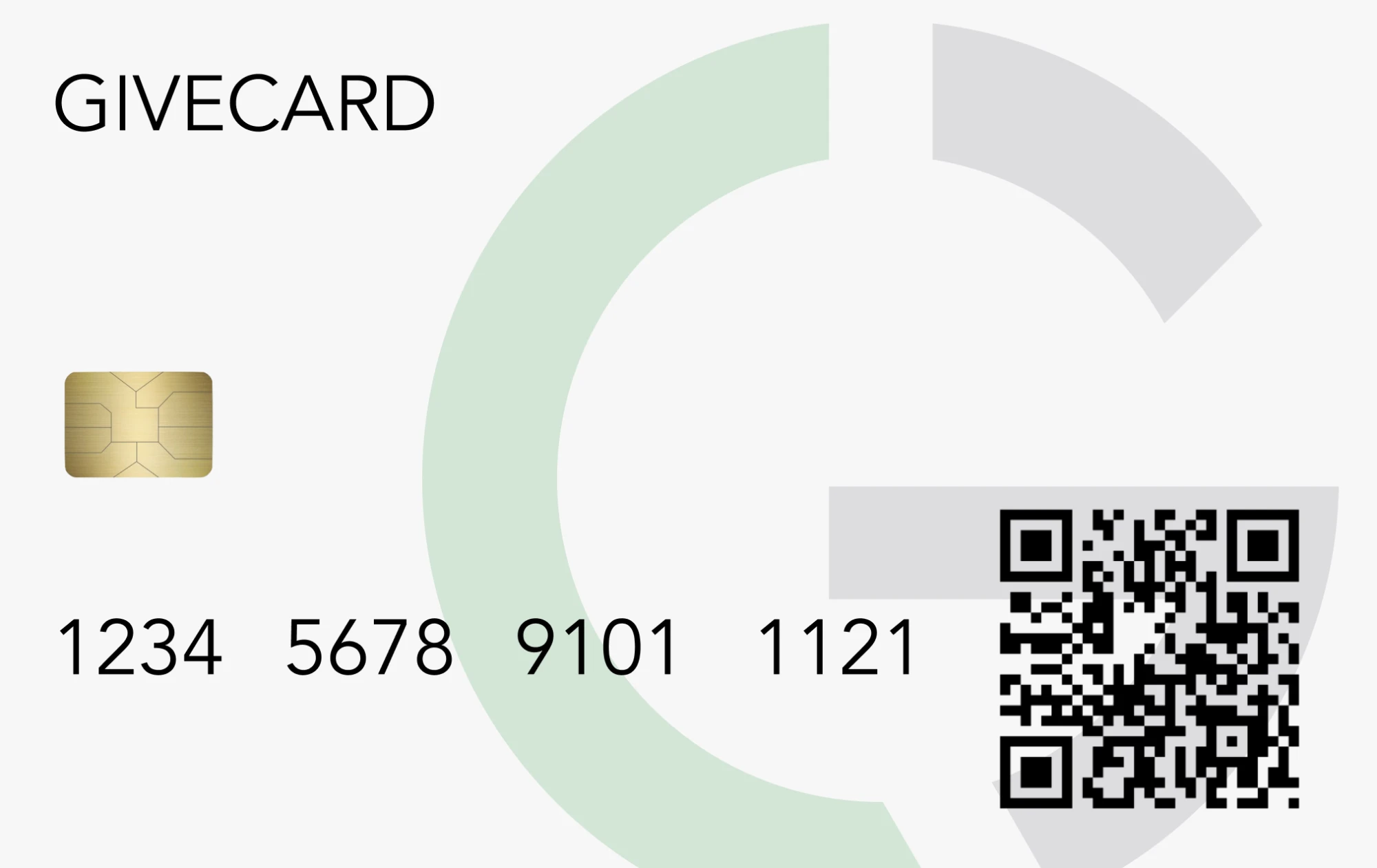
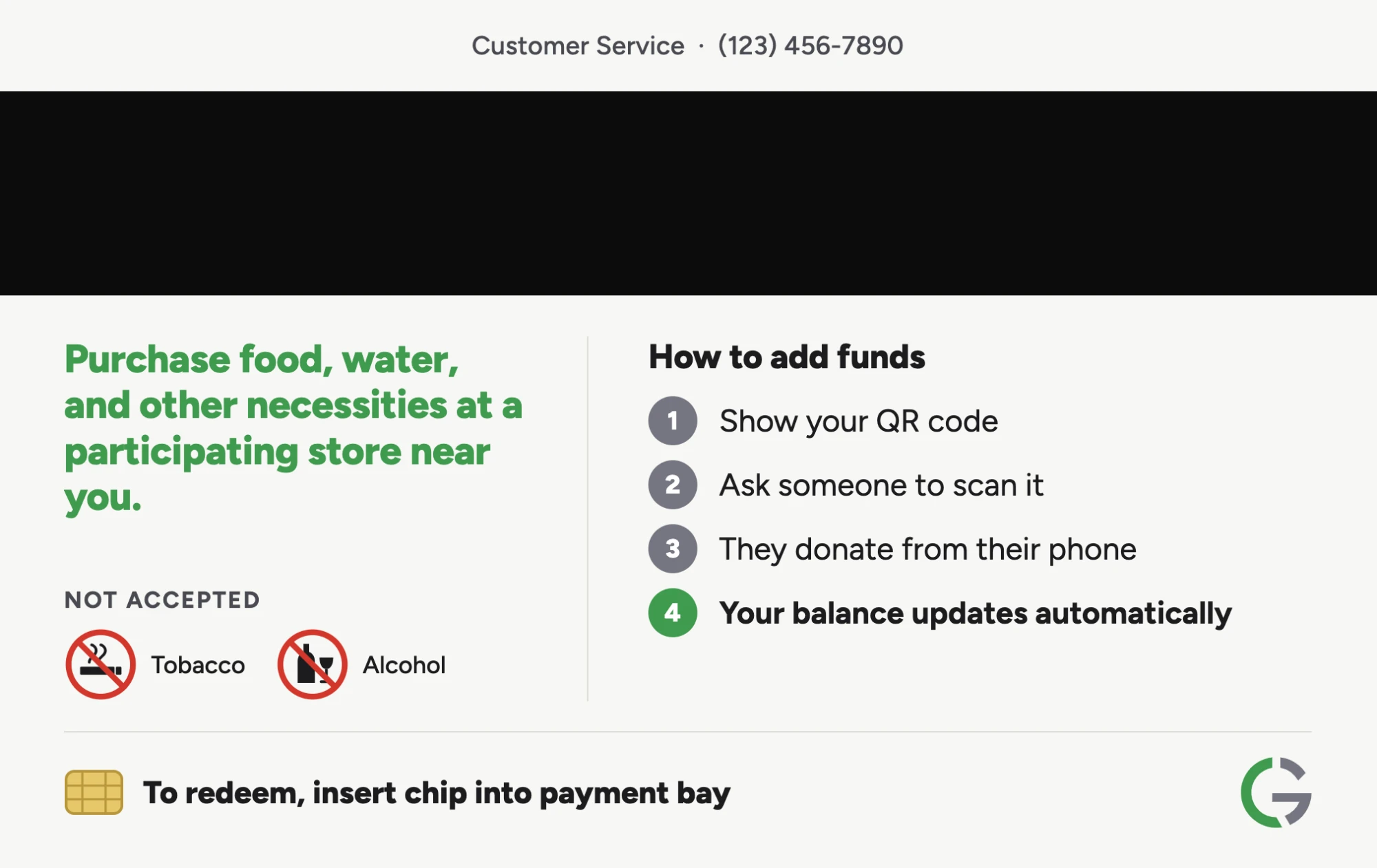
ConceptThe GiveCard, front and back
Drag the card to turn it
At the store
Demo balance $20.00
A cashier scans the basket and the GiveCard pays at the register. Watch what goes through.
- Bottled water$1.50
- Sandwich$6.00
- Cigarettes$12.00
- Apples$3.00
“Should I give them money?”
Most of us have hesitated when someone on the street asks for help. We want to give, and many people who ask are ignored while in genuinely difficult situations. But three things get in the way:
- Safety and comfort. Pulling out a wallet on a busy street feels exposed.
- No cash. With tap-to-pay and mobile wallets, many people simply don’t carry any.
- Uncertainty. The biggest hesitation: donors don’t know what the money will be spent on, and worry it may go to alcohol or drugs.
What the research says
The data cuts both ways: most people who ask do spend on food, which is exactly the spending GiveCard protects.
- 94% spend donations on food
- 44% spend donations on drugs or alcohol
- 25% report alcohol dependence
- 32% report drug dependence
Survey of 146 people panhandling in downtown San Francisco; respondents could give more than one answer, so figures overlap. Source: “The City’s panhandlers tell their own stories,” SFGATE, opens in a new tab.
The opportunity
How might we let people give on the spot, without cash, and trust that their gift covers essentials, while keeping the experience dignified for the person receiving it?
A restricted-use giving card, in three parts
GiveCard is a prepaid card that can only be redeemed for food, water and other necessities. Donors add funds by scanning a QR code; stores enforce what it can buy at checkout.
-
01
The physical card
Carried by the recipient. A QR code on the front links donors straight to a giving page; the card number works as a fallback. Cards are distributed through partners, and individuals can order them online to hand out.
-
02
A POS integration for stores
An API that plugs into participating stores’ point-of-sale systems and flags items the card can’t buy. Scan cigarettes or alcohol and the purchase is blocked; groceries and water go through.
-
03
The giving website
Where every QR scan lands. Donors give in seconds with PayPal, Venmo and other third-party payments, and anyone can order cards to distribute. It doubles as the brand’s landing page.
How a gift moves through the system
- 1Recipient
Shows their GiveCard when asking for help.
- 2Donor
Scans the QR code, or types in the card number.
- 3Donor
Gives any amount on the web page using PayPal, Venmo or a card.
- 4System
The card balance updates instantly.
- 5Store
Recipient taps the chip at checkout; restricted items are blocked.
A three-sided product
-
People asking for help
Receive support even from donors who carry no cash, and build trust with the people who give.
More, and more willing, donors
-
Donors
Give quickly from their phone, without opening a wallet, and know their money goes to necessities.
Give without worry
-
Businesses
Bring in new foot traffic and show visible commitment to the community they operate in.
Stronger CSR and local ties
Simple, visual, and usable without a phone
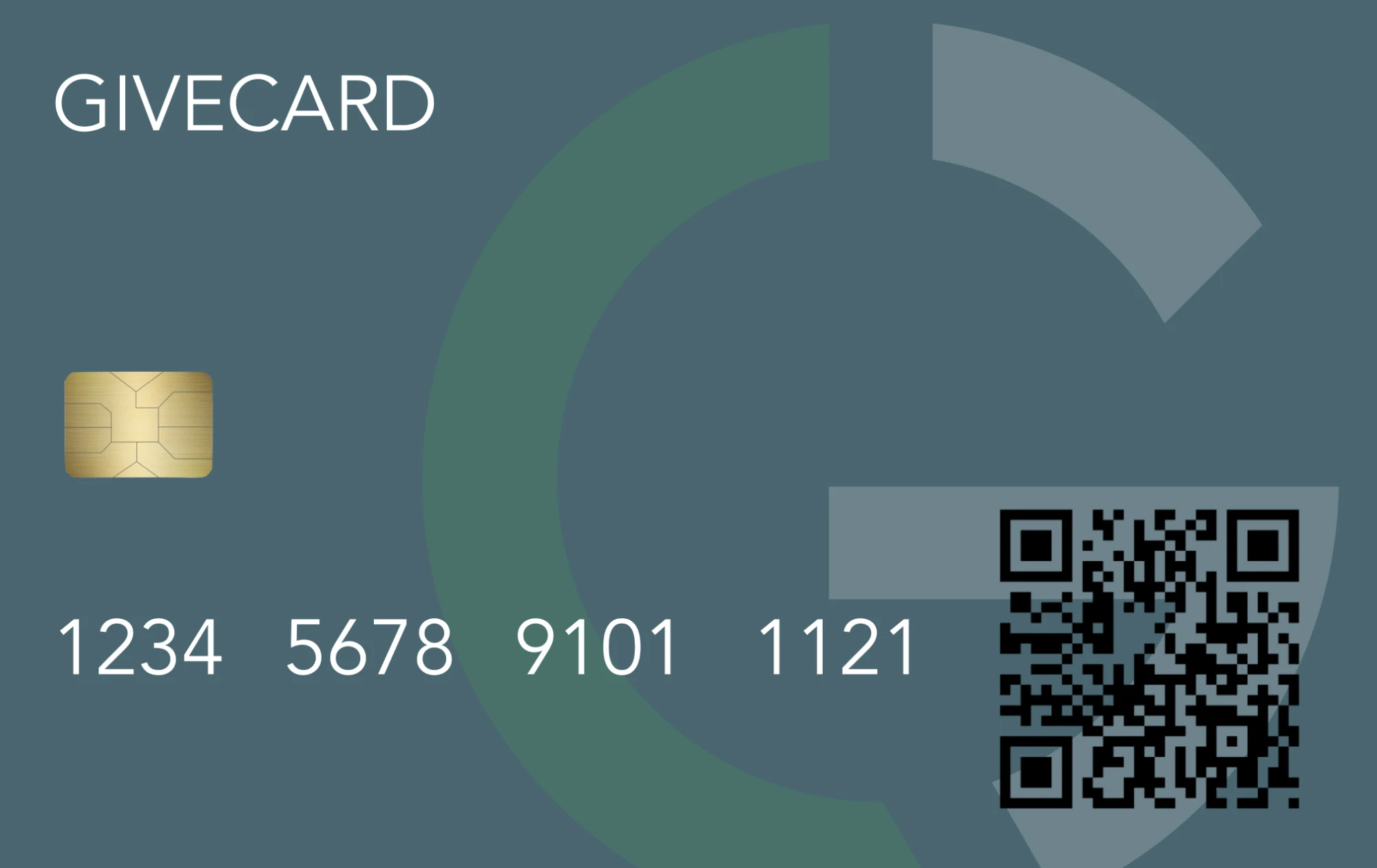
The person holding the card never needs a smartphone or bank account. Everything they need to know is printed on it.
Front
- Large QR code the donor scans to give
- Card number as a manual fallback if the QR won’t scan
- EMV chip for redemption at checkout
- Two colorways (white and slate) built on the G mark
Back
- Four-step “How to add funds” guide for donors
- Prohibited-item icons (tobacco, alcohol) understood at a glance
- Where to spend: participating stores
- Customer service number


Palette
- Black #000000
- Green #3A9A4C
- Slate #4A6670
- Off-white #FEFCFB
- Grey #757780
Typography
- Avenir Light GIVECARD Wordmark and card number
- Avenir Book Show your QR Code Instructions and small print
- Avenir Heavy Purchase food, water, and other necessities Key lines
Key performance indicators
Grouped by the question each one answers, so it’s clear what healthy growth looks like on every side of the product.
-
Reach
Is the network growing?
- Cards purchased and distributed
- Participating stores
-
Giving
Are donors using it?
- Total value donated
- Average donation per QR scan
-
Impact
Is the money reaching people?
- Number of redemptions
- Share of balance redeemed
-
Sentiment
Do people trust it?
- Net Promoter Score (donors)
- Recipient and store feedback
What would need to be true
Dignity and autonomy
Restricting spending can feel paternalistic. Recipients should help define what counts as a necessity, such as hygiene items, transit or phone credit.
Merchant adoption
The card is only as useful as the stores that accept it. Launching with one grocery or pharmacy chain avoids a chicken-and-egg stall.
Lost or stolen cards
A balance on a lost card is a real loss. A PIN plus a way to freeze and transfer the balance protects recipients.
Fees and compliance
Payment processing and prepaid-card rules will shape the business model. Who covers fees so donors’ full gift arrives?
Distribution
Partnering with shelters, food banks and outreach nonprofits puts cards in the right hands and adds a layer of trust.
Roadmap
- Pilot
One city, one store partner
Test with a single grocery chain and a local nonprofit handling card distribution; measure redemptions and donor repeat rate.
- Security
PIN protection
Add a PIN at redemption so a lost card can’t be spent by someone else.
- Growth
A GiveCard app
A donor app with giving history and gamification, such as streaks and community goals, to encourage repeat giving.